Pompeii Bodies: Plaster Casts And Where To See Them
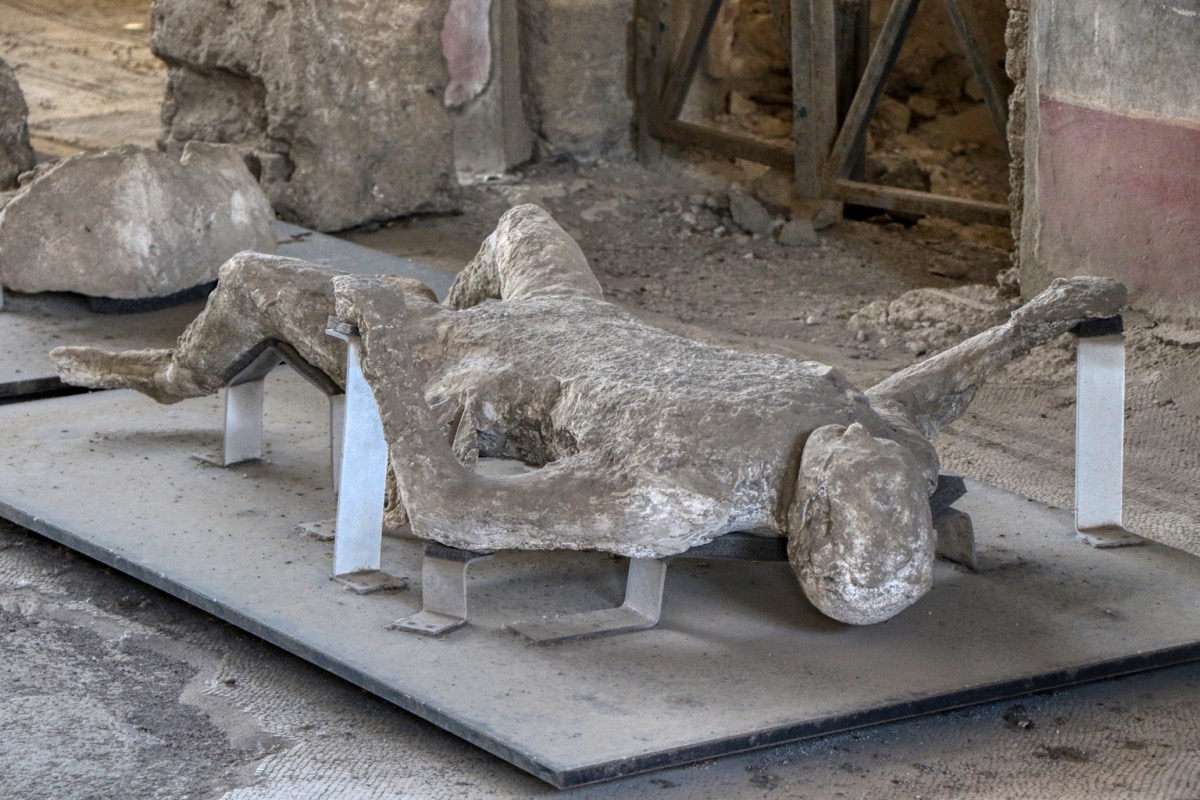
So, those figures you spot at Pompeii? They're not actually frozen bodies. They're plaster casts, made by pouring plaster into the empty spaces left after the victims' bodies decomposed inside the hardened volcanic ash. This is probably the most misunderstood thing about Pompeii, and honestly, once you get it, you start looking at every cast a little differently.
When Mount Vesuvius erupted in AD 79, it buried Pompeii and its people under layers of ash and pumice. Over time, the bodies decayed, but the ash kept its shape, holding onto details like folds in clothing, facial expressions, and even how people were lying or sitting. In the 1860s, archaeologist Giuseppe Fiorelli came up with the idea to pour liquid plaster into those spaces, which is how we ended up with the haunting figures you see today.
Archaeologists have recovered more than 1,100 victims throughout the site so far. Many casts still have skeletal remains inside, which CT scans keep confirming. These scans keep giving us new insights into the people who lived (and died) here. If you want to see the most famous casts, check out the Garden of the Fugitives, the Antiquarium, and the area near the Macellum inside the archaeological park.
Thinking about a 2026 visit? Heads up: nominative tickets, a daily cap of 20,000 visitors, and peak-season timed entry all affect your experience. Do yourself a favor and plan ahead—it really helps.
Key Takeaways
- The famous Pompeii "bodies" are actually plaster casts made from voids in the ash, not petrified corpses. Most still have skeletal remains inside.
- Giuseppe Fiorelli came up with the casting technique back in the 1860s, and today, CT scans keep changing what we know about the victims.
- For 2026, nominative tickets, timed entry, and a daily cap of 20,000 visitors mean you should plan ahead if you want to see the casts without fighting crowds.
What Visitors Mean By The "Bodies"
People usually show up at Pompeii expecting to see preserved human remains. But what you actually get are plaster replicas of the spaces where those bodies once were. This difference matters for accuracy and for understanding what the casts can actually tell you.
Why The Famous Figures Are Plaster Casts, Not Petrified Corpses
The figures you see around Pompeii aren't stone bodies turned solid by volcanic ash. When the eruption buried the city, layers of hot ash and pumice settled around people and hardened. Over the centuries, the soft tissue decayed, leaving empty spaces in the compacted ash. These cavities kept the shape, posture, and even the folds in clothing of each person.
Later, archaeologists filled those spaces with plaster to make three-dimensional casts. They look uncannily lifelike, but what you're seeing is plaster—not preserved skin or bone.
What Remains Inside The Casts
Even though the outside is plaster, most original casts aren't empty inside. Bones and teeth often survived in the ash cavities. When Fiorelli poured the plaster, it set around whatever bones were still there.
CT scans in recent years confirmed this. Researchers have found skulls, vertebrae, and even stuff like coins, jewelry, and keys inside the casts. These bones tell us a lot about the victims' age, health, diet, and sometimes even how they died.
Why The Distinction Matters For Understanding Pompeii
Calling them "bodies" is common, but it's a bit off. These are archaeological artifacts, made using a specific process—not naturally preserved remains. Once you know this, you start to appreciate Fiorelli's ingenuity and the limits of what any one cast can actually reveal.
It also changes how you look at them on site. These casts represent real people who died in a disaster. Respect starts with knowing what you're really looking at.
How Giuseppe Fiorelli Created The Casts
In the 1860s, Giuseppe Fiorelli completely changed how people studied Pompeii. He invented a simple, brilliant technique: plaster casting. This method revealed the forms of victims who had been hidden for almost 1,800 years. Later, tech like CT scans added details he never could've imagined.
The Discovery Of Human-Shaped Voids In Hardened Ash
Before Fiorelli, excavators sometimes broke through the ash and found empty spaces with loose bones. At first, these gaps confused people. Workers occasionally damaged or ignored them.
Fiorelli, who eventually ran the Pompeii digs, realized what these voids meant. Each was a perfect negative of a human body, made after flesh and clothing decayed inside the sealed ash. The volcanic material formed a natural mold, keeping posture, facial features, and even garment folds intact.
Fiorelli's 1860s Plaster Technique Step By Step
On February 3, 1863, Fiorelli tried his idea for the first time. His team found a void in the ash and poured liquid plaster of Paris and glue through a small hole. The plaster filled every detail, even wrapping around any bones still inside.
Once the plaster set, workers chipped away the volcanic material to reveal the cast. The result was a three-dimensional figure showing exactly how the victim was positioned at death. Details like hair, sandal straps, and clenched hands came through surprisingly well.
People have repeated this method many times since, though some modern casts use transparent resin instead of plaster. That way, researchers can study the bones inside without breaking the cast open.
How Later Analysis Used CT Scans To Reinterpret The Victims
Starting in the late 20th century, researchers began using CT scans to look inside casts without damaging them. These scans show cross-sections of the inside, revealing bones, teeth, and objects trapped in the plaster.
CT scanning has corrected some old assumptions. Sometimes, the age or sex of a victim, guessed from the outside, turned out to be wrong after looking at the skeleton inside. Teeth showed signs of diet or disease. Items found inside certain casts have given clues about social status.
Recently, ancient DNA analysis has even challenged old stories about relationships between victims. For example, a pair once called a mother and child turned out to be an adult male and someone else, thanks to genetic testing. These discoveries are a reminder: the casts capture a moment, but the full story often needs deeper science.
How The Victims Died In The Eruption
The eruption of Mount Vesuvius in AD 79 lasted about 18 to 24 hours and killed people in different ways as it went on. Pompeii and Herculaneum both suffered horribly, but the volcano hit each town differently, which is why the victims look so different at each site today.
The Role Of Mount Vesuvius In The AD 79 Disaster
Mount Vesuvius is about 9 kilometers northwest of Pompeii. When it erupted around midday, it shot a giant column of gas, pumice, and ash into the sky. The Roman writer Pliny the Younger watched from across the bay and said the column looked like a tall pine tree.
This wasn't a slow lava flow. Vesuvius produced a Plinian eruption—one of the most explosive types. The energy was about 100,000 times greater than the atomic bombs dropped in 1945. Hard to even imagine, right?
Ash Fall, Roof Collapse, And The Arrival Of Pyroclastic Flow
In the first stage, pumice and ash rained down on Pompeii for hours. Buildings ended up with meters of debris on their roofs. Many people fled during this phase, which is why most of the city's 11,000 to 20,000 residents survived.
The ones who stayed faced growing danger. Roofs collapsed under the weight, killing some by blunt force. Others hid in rooms or cellars, hoping things would calm down.
But it didn't. Later, the eruption's column collapsed, sending pyroclastic flows—superheated gas, ash, and rock—down the volcano at over 100 kilometers per hour. Temperatures reached several hundred degrees Celsius. When these hit Pompeii, death was nearly instant. Recent studies suggest the heat killed most victims before they could even suffocate.
Why Pompeii And Herculaneum Preserve Victims Differently
Herculaneum, being closer to the volcano, got hit by pyroclastic flows earlier and even hotter. The heat preserved victims differently. Instead of leaving voids, the thermal shock at Herculaneum often left behind skeletons, sometimes with traces of carbonized tissue.
Pompeii got more ash before the pyroclastic flows arrived. The ash encased victims and compressed, making the voids Fiorelli later filled with plaster. That's why Pompeii is known for its detailed casts, while Herculaneum is famous for its skeletons—especially the ones found in the boat chambers by the waterfront.
Both sites give us different pieces of the same disaster, each preserving a unique part of the story.
Where To See The Casts Inside The Archaeological Park
You'll find plaster casts in several spots inside the Pompeii archaeological park. Some are in special exhibitions, while others are right where the victims were found.
Garden Of The Fugitives (Orto Dei Fuggiaschi)
This is easily the most popular place to see casts in Pompeii. It's in the southeastern part of the site, near the Amphitheater entrance at Piazza Anfiteatro. The Garden of the Fugitives has thirteen casts under a protective cover. You'll see adults and children, many shielding their faces or holding each other.
These people were probably trying to escape when the pyroclastic flow caught them. The group is powerful because of its size and because the casts are still more or less where they were found. It's pretty moving.
The Antiquarium
The Antiquarium, near the Porta Marina entrance, is Pompeii's on-site museum. Here, you'll find a selection of casts alongside artifacts, frescoes, and other objects from the digs. The displays put the casts in the bigger picture of what daily life was like before the eruption.
If you're coming in through Porta Marina, this is a great place to start. The historical background here makes everything you see afterward in the park feel richer.
The Macellum
The Macellum, Pompeii's old food market near the Forum, has a few casts in a storage area at the back. It's usually less crowded than the Garden of the Fugitives, so you can take your time looking at the details.
Most people pass through the Forum early if they enter from Porta Marina, so the Macellum is a convenient stop on your route.
Other Notable Contexts Like The House Of The Golden Bracelet
Some casts sit right in or near the buildings where archaeologists found the victims. Take the House of the Golden Bracelet for example. This spot, just off Via di Porta Marina, turned up the remains of what looks like a family with a young child. They discovered a gold bracelet on one victim, which is how the house got its name.
You’ll spot other casts tucked away in storerooms, exhibition halls by the Palestra Grande, or even in temporary displays. These locations can change as restoration work or new exhibits come along. It’s smart to check sites like PompeiiItaly.org for the latest info before you go, so you don’t waste time wandering.
What Modern Research Reveals About The Victims
Scientific research on Pompeii’s victims has picked up speed lately. Imaging tech, DNA testing, and comparisons with other sites are shaking up ideas that stuck around for decades.
What Bones, Teeth, And Personal Objects Can Show
The bones inside the plaster casts give us a ton of clues. By looking at the skeletons, researchers figure out things like age, sex, height, and signs of hard work or disease. Teeth are even more telling. Wear patterns, cavities, and enamel problems hint at what people ate, their health as kids, and what issues they dealt with.
Personal items trapped in the casts add more to the story. Coins, rings, keys, and little tools show what folks grabbed as they ran or took shelter. That gold bracelet I mentioned earlier? It’s a good clue that the person had some wealth.
How New Imaging Has Challenged Older Assumptions
CT scans and DNA testing have flipped a few old stories on their heads. Remember the group of casts once labeled as a mother hugging her kids? DNA showed the supposed mother was actually a man, and some people in the group weren’t related at all.
It’s wild, right? Just because a pose looks protective doesn’t mean it’s a parent and child. People huddled together for all sorts of reasons—sometimes just because they were nearby, not because they were family.
Genetic studies also show Pompeii was more of a melting pot than people thought. Some victims’ DNA points to roots in the eastern Mediterranean, which fits for a busy Roman port city.
Why Nearby Sites Like Oplontis Matter
Pompeii isn’t the only place where researchers have studied eruption victims. Oplontis, a villa complex buried by the same disaster, turned up a group of people in one room. They carried a lot of gold and jewelry, so maybe they were wealthy or tried to grab valuables before escaping.
Herculaneum, with its skeletons in the boat chambers by the shore, gives us more info about how people died, what kind of heat they faced, and who lived there. By looking at all these sites together, scientists get a fuller picture of how the eruption hit different communities around Mount Vesuvius.
Planning A 2026 Visit To See Them
If you want to see the casts in person in 2026, you’ll need to do a bit of homework ahead of time. There are new rules about tickets, daily visitor caps, and set entry times—especially during busy months.
Advance Nominative Tickets And ID Checks
Every ticket for Pompeii now has to be nominative. That means your name is printed on it, and you can’t just hand it off to someone else. You’ll need to show a government photo ID that matches your ticket when you arrive.
Book tickets through the official site at pompeiisites.org via VivaTicket, or use an authorized partner. Standard adult tickets run about 18 to 20 euros. EU citizens ages 18 to 25 get in for around 2 euros, and under 18s are free but still need a booking. I’d suggest checking PompeiiItaly.org to compare your options and avoid booking headaches.
Daily Visitor Cap And Peak-Season Timed Entry
The park lets in 20,000 people each day. In the busy season—basically April to October—tickets come with set entry times. Once a slot fills up, that’s it.
If you’re planning a summer or holiday visit, you really want to book early. Weekday mornings usually have more open spots than weekends. If you can swing it, go midweek in April, May, or October for nicer weather and fewer crowds.
Best Entrance Strategies And Timing For Seeing Key Areas Respectfully
You’ve got three entrances: Porta Marina, Piazza Anfiteatro, and Piazza Esedra.
If seeing the casts is your top goal, here’s what to know:
- Porta Marina gets you right to the Antiquarium and the Forum, where the Macellum casts are. It’s a good place to start if you want some background before wandering off.
- Piazza Anfiteatro drops you near the Garden of the Fugitives, and it’s usually quieter first thing in the morning.
- Piazza Esedra sits in between, with easy access to several big streets.
Try to show up at the start of your entry window, so you can see the main casts before the crowds build up. Early mornings and late afternoons are usually the calmest. From April to October, the park opens at 9:00 AM, but on some summer weekends it starts at 8:30 AM.
When you’re near the casts, please keep your distance. These were real people. Don’t touch the barriers, and keep noise down—especially in small spaces like the Garden of the Fugitives.
Frequently Asked Questions
How did they make the human casts from the voids in volcanic ash?
After volcanic ash hardened around the bodies, the flesh and clothes decayed away, leaving detailed hollow spaces in the ash. In the 1860s, Giuseppe Fiorelli came up with the idea to pour liquid plaster mixed with glue into those cavities. Once the plaster set, workers chipped away the ash, and suddenly you’ve got a three-dimensional cast showing the person’s pose, clothing folds, and facial features from their last moments.
What do the remains tell us about how people died during the eruption?
Most people in Pompeii died in the later phase of the eruption, when superheated gas and rock—pyroclastic flows—raced through the city. The heat was so extreme that it vaporized body fluids almost instantly, so death came very fast for most. Looking at the bones, researchers also found injuries from collapsed roofs during earlier ash falls.
Where can you see the most famous casts, like the embracing couple?
The Garden of the Fugitives, near the Piazza Anfiteatro entrance, has thirteen casts right where they were found. It’s the most popular spot for seeing casts. The Antiquarium near Porta Marina and the Macellum by the Forum also have well-known figures. Some groups, like the “embracing couple” or “mother and child,” have new backstories now, thanks to DNA tests—so don’t be surprised if the guidebooks sound a bit outdated.
Have they really found a pregnant victim among the casts?
Some old reports and popular stories claim certain casts show pregnant women, usually because of a rounded belly. But detailed exams—CT scans and bone analysis—haven’t proved any famous casts were actually pregnant. Swelling in the belly area can happen from decomposition or even the casting process, so you can’t trust appearances alone.
How have conservation methods changed the appearance of the casts over time?
Fiorelli made the early casts with plaster of Paris mixed with glue. That stuff tends to yellow and break down as it gets older. Some of those 19th-century casts have cracked or lost some of their surface detail over the years.
These days, people use transparent resin instead of plaster. With resin, researchers can actually see the skeletal remains inside without having to break anything open. Conservation teams step in from time to time to stabilize the older casts and tweak the display conditions, hoping to slow down any more damage.
That’s why, if you compare them to old photos, some casts might look a bit different now.