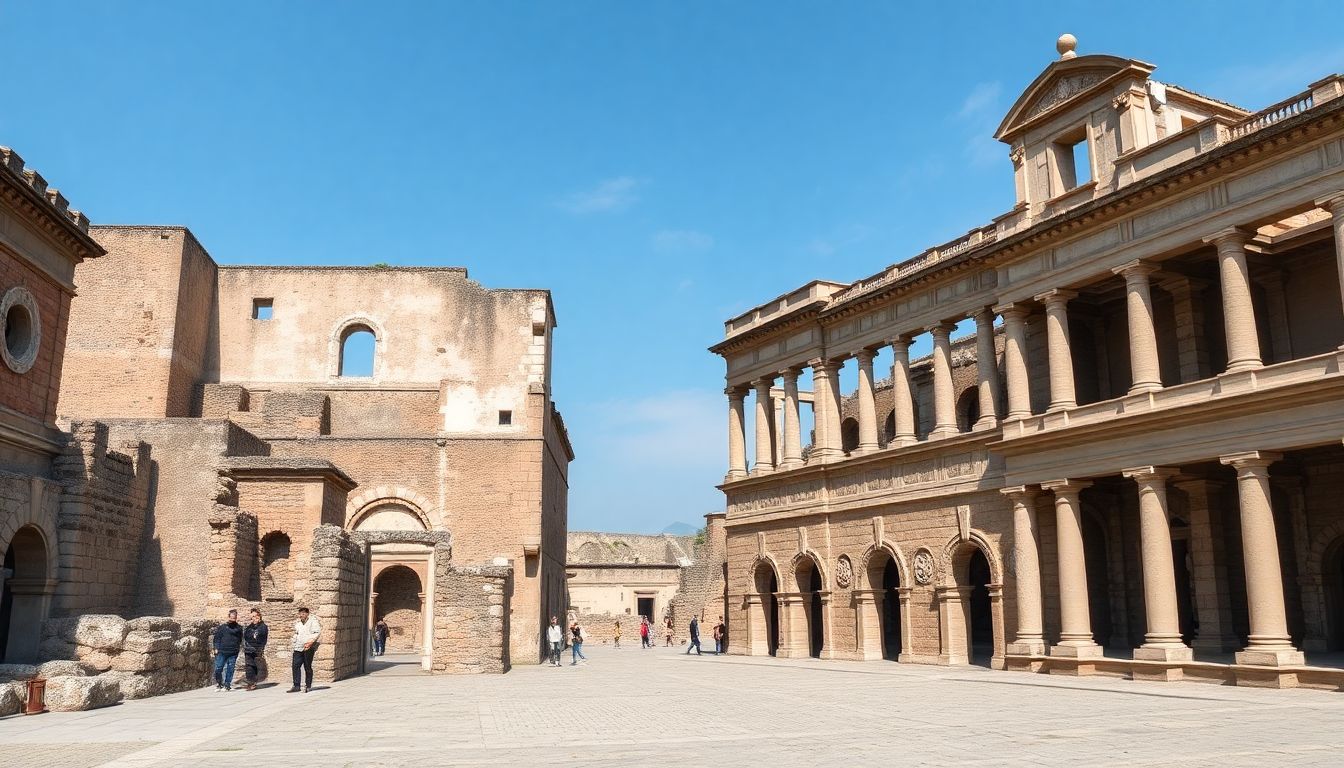
Herculaneum Ruins Visitor Guide
Herculaneum sits just seven kilometers from Mount Vesuvius’s crater—actually even closer than Pompeii. Still, way fewer people wander its streets each year. In 79 AD, the same eruption buried this compact Roman town of about 5,000 under up to 23 meters of volcanic debris. What’s left is honestly one of the best-preserved ancient sites you’ll ever see. There’s surviving wooden furniture, upper floors still standing, and mosaics bursting with color—stuff you just won’t find at its more famous neighbor.
If you’ve only got a few hours to spare near Naples and want a close-up, manageable look at Roman life, Herculaneum packs more preserved detail into every square meter than anywhere else. You can see the whole excavated area in two or three focused hours, hop there on a quick Circumvesuviana train from Naples or Sorrento, and still have time to head up Vesuvius the same day.
This guide will help you plan your visit: how to get to Ercolano Scavi, what tickets you’ll need, the must-see sights inside the ruins, and some practical tips to save you time and stress.
Key Takeaways
- Herculaneum is smaller and better preserved than Pompeii, so you can see it all in two or three hours without feeling wiped out.
- The Circumvesuviana train from Naples gets you to Ercolano Scavi in about 15 minutes, making it easy to work into most Campania itineraries.
- Unusual highlights—like carbonized wooden furniture, ancient boat houses, and entire upper-story rooms—make this site totally different from any other Roman ruin.
Why Herculaneum Feels Different From Pompeii
Herculaneum and Pompeii both got destroyed on the same day, but the way each town was buried shaped two totally different experiences for visitors. The size, the preservation, and the vibe of Herculaneum all set it apart.
A Smaller And Easier Site To Navigate
Archaeologists have only dug up about a quarter of ancient Herculaneum. The rest? It’s still under the modern city of Ercolano, sitting some 24 meters above the old streets. That might sound like a bummer, but honestly, it works in your favor.
The part you can visit is so compact, you can really explore it in two or three hours without rushing. Unlike at Pompeii, you won’t be trekking for miles. The streets are laid out in a tight, logical grid. You can loop through every open building without needing a map every few minutes or backtracking all day.
Crowds? Not a big deal here. Herculaneum gets just a fraction of Pompeii’s daily visitors. That means quieter rooms, better photo ops, and space to actually stop and take it all in.
What Better Preservation Actually Means
Pumice stones called lapilli buried Pompeii under meters of lightweight rock. Since these stones are porous, air got in, organic stuff rotted, and roofs eventually caved in from the weight.
Herculaneum had a different fate. Pyroclastic surges—think superheated waves of gas and debris—slammed into the town about 20 hours after the eruption started. This stuff hardened almost like concrete, sealing the city in a totally airtight shell.
That seal changed everything. You’ll see original wooden beds, doors, roof beams, and even a carbonized baby cradle. They’ve even found food, cloth, and rope here. The frescoes look much sharper too, since they weren’t exposed to centuries of weather before being uncovered.
Why The Town Appears Wealthier And More Residential
Herculaneum wasn’t a busy trading hub like Pompeii. It was a smaller, quieter seaside escape for wealthy Romans who loved the Bay of Naples and Capri views. The homes here tend to be more elaborate, with fancy mosaic floors and really elegant interiors.
You’ll spot way fewer shops and taverns than in Pompeii, but way more spacious private houses with gardens and courtyards. The Samnite House, the House of the Neptune Mosaic, and others all show off a population that valued comfort at home. This more residential vibe makes the place feel personal—almost intimate—something you rarely get at sprawling Pompeii.
Planning Your Visit
To enjoy Herculaneum, just time your arrival right, know how long you want to stay, and match the site to your travel style.
How Long To Spend At The Site
Give yourself two to three hours inside the archaeological park. That’s enough to stroll every excavated street, check out the major houses, see the boat houses on the old shoreline, and really take in the mosaics and carbonized wood.
If you join a guided tour, plan for closer to three hours. If you’re self-guided and focused, you might power through in 90 minutes, but honestly, you’ll probably want more time once you see how well everything’s preserved.
Best Time Of Day And Season To Go
Try to get there right when the site opens. In summer (April to October), gates open at 8:30 AM on weekends and 9:00 AM on weekdays. Early means cooler temps, better light for photos, and hardly any crowds.
Late afternoon also works well. Most tour groups are gone by then, and things quiet down between 10:00 AM and 2:00 PM.
For seasons, spring (April and May) and early fall (September and October) are perfect—comfortable weather and manageable crowds. Summer’s doable, but it gets hot and there’s not much shade. Winter hours are shorter (8:30 AM to 5:00 PM, last entry at 3:30 PM), but you might get the whole place almost to yourself on a weekday in January.
Who Herculaneum Suits Best
If you’re short on time, traveling with older folks, or have kids who’d get tired at Pompeii, Herculaneum is a great pick. The small layout and lack of crowds make it easy for just about anyone.
It’s also perfect if you care more about seeing well-preserved details than covering a huge area. History buffs, architecture fans, and photographers will definitely appreciate a slower pace here. If you can do both sites in a day, go for it. But if you have to choose, and you want depth over size, Herculaneum wins.
How To Get To Ercolano
Ercolano, the modern city on top of ancient Herculaneum, connects easily to public transport from all the main regional bases. Most people take the Circumvesuviana commuter rail.
Circumvesuviana From Naples To Ercolano Scavi
From Naples, hop on the Circumvesuviana train (Naples-Sorrento line, Line 1) at Napoli Centrale or Piazza Garibaldi. Get off at Ercolano Scavi—that’s your stop for the ruins.
The ride takes about 15 to 20 minutes. One-way tickets cost around €2.80. Trains leave roughly every 30 minutes. Heads up: not every Sorrento-bound train stops at Ercolano Scavi, so check the departure board before you get on.
Circumvesuviana From Sorrento To Ercolano Scavi
If you’re coming from Sorrento, take the same Circumvesuviana line toward Naples. It takes about 40 to 50 minutes and costs around €2.40 one way. Trains run about every half hour.
Try to board early for a seat—the Circumvesuviana can get packed during morning rush, especially in summer.
Walking From The Station To The Entrance
Once you step off at Ercolano Scavi, it’s a seven-to-ten-minute walk to the archaeological park entrance. Exit the station, turn right, and follow Via IV Novembre downhill. You’ll pass a bunch of restaurants, souvenir shops, and cafes.
The route’s simple and well marked. Just keep heading downhill toward the water, and you’ll spot the entrance gates on your left.
Visiting By Car Or As Part Of A Day Trip
Driving to Herculaneum is easy from Naples (about 20 minutes) or the Amalfi Coast. Paid parking lots sit near the entrance, usually costing €5 to €10 for the day. In peak season, show up early—spaces fill up fast.
Lots of people visit Herculaneum as part of a day trip from Naples, Sorrento, or even Rome. Tours often pair Herculaneum with Vesuvius, which makes sense since the access road is just a few kilometers away. If you want to skip the planning, a guided day trip handles transport for you.
Tickets And Entry Basics
Getting tickets at Herculaneum is pretty straightforward, but a couple things are worth knowing before you go.
Where To Buy Tickets
You can buy regular entry tickets from the official Archaeological Park of Herculaneum website or on CoopCulture. A standard adult ticket is about €16. EU residents aged 18 to 25 pay just €2, and anyone under 18 gets in free with ID.
Authorized third-party sites like GetYourGuide, Viator, and Tiqets also sell tickets, sometimes bundled with skip-the-line entry or guided tours. Those usually cost a bit more, but can save you time at the entrance when it’s busy. Booking your skip-the-line tickets or guided tours in advance with a trusted partner is honestly the best way to avoid queues, especially in peak season.
The Campania Artecard pass is another solid option. It covers Herculaneum plus other regional museums and sites, and includes public transport.
What To Check Before Booking
Double-check the date and time slot before you finish buying. Herculaneum uses timed entry, and slots can sell out in summer and on holidays.
Make sure the name on your ticket matches your government-issued photo ID. Like at Pompeii, tickets at many Campania archaeological sites are now nominative, so the name on the booking has to match the person entering.
Also check the cancellation and refund policy for whichever site you use. Official and third-party tickets don’t always have the same rules.
Entry Rules And On-Site Practicalities
Bring your photo ID to the entrance. If your ticket has your name on it or you’re after a discounted or free entry, you’ll need it.
Large bags and backpacks aren’t really allowed, so travel light or just bring a small daypack. There’s no bag storage at the site, which can be a bit of a pain if you show up loaded down.
Once you’re in the park, stick to the marked paths. The volcanic ground gets bumpy and uneven, and some buildings have low doorways or tight passages. Don’t touch the frescoes, mosaics, or any exposed wood—staff will call you out. There’s a small cafe near the entrance, but after that, you won’t find food or drinks inside the ruins. Bring your own water, seriously.
On select days—like the first Sunday of each month, April 25, June 2, and November 4—you can get in for free. But expect big crowds. Sometimes the savings aren’t worth the chaos, in my opinion.
Top Sights Inside The Archaeological Area
The excavated part of Herculaneum isn’t huge, but it’s packed with buildings that are honestly all worth poking your head into. Here are the spots you really shouldn’t miss.
The Ancient Boat Houses
Head to the old shoreline first. You’ll see it from the raised walkway as you come in. The arched boat houses (fornici) along the ancient beach are where archaeologists found over 300 skeletons back in the 1980s. These poor folks tried to escape by sea.
The story here feels immediate and grim. You can look down on the arches and, if access is open, get a closer look at the chambers. The pyroclastic surges that hit the shore reached temperatures around 400°C. This spot hits hard emotionally—don’t rush through it.
The House Of The Neptune Mosaic
This mosaic gets photographed more than anything else in Herculaneum, and it’s clear why. The wall mosaic of Neptune and Amphitrite still pops with blue, green, and gold glass that looks almost brand new.
The shop at the front still has original wooden shelves and storage jars. It’s probably the clearest surviving example of a Roman shop attached to someone’s home.
Carbonized Wood And Surviving Upper Floors
Herculaneum stands out for its preserved organic material. You’ll spot carbonized wooden beams, doors, window frames, bed frames, and even partition walls throughout the ruins. Some houses still have bits of their original upper floors.
That’s wild, honestly. At Pompeii, upper floors are basically gone. Here, you can look up and picture people living above you. Check out the House of the Wooden Partition—there’s a huge folding wooden screen still in place after nearly 2,000 years.
The Samnite House And Other Notable Homes
The Samnite House is one of the oldest buildings here, dating back to the 2nd century BC. Its atrium has a gallery with Ionic columns and delicate stucco that shows off pre-Roman Italic style.
Other homes worth seeing include the House of the Deer, with its garden statues and sea-view terrace, and the House of the Mosaic Atrium, famous for its warped geometric floors. Each house feels a little different, which really brings out the neighborhood vibe of the town.
Baths, Streets, And Everyday Urban Details
The Suburban Baths near the old shoreline are some of the best-preserved Roman baths you’ll ever see. Check out the marble benches, water channels, mosaic floors, and vaulted ceilings—they’re all intact.
Walk the main streets—the cardines and decumani. You’ll spot ruts from ancient carts, public fountains, and thermopolia (old Roman snack bars) with their built-in counters. These details make Herculaneum feel like a real town, not just an archaeological site.
Tips For A Smooth Visit
A bit of planning makes Herculaneum way easier. It’s not huge, but it’s still an outdoor site with all the usual challenges.
Footwear, Sun, And Weather Prep
Wear sturdy, closed shoes with good grip. The old streets are uneven volcanic stone, and some floors inside get pretty slick. Sandals and flip-flops are just asking for trouble.
In warmer months, pack sunscreen, a hat, and sunglasses. There’s not much shade, and the dark rock soaks up the sun. Bring at least a liter of water per person since you won’t find drinks once you’re inside.
During winter, bring a light jacket. The site sits in a pit, so it can feel chillier among the buildings than it does up on the street.
How To Pair Herculaneum With Pompeii Or Vesuvius
Pairing Herculaneum with Mount Vesuvius feels like the obvious choice. The road up to the volcano’s crater starts just a few kilometers from Ercolano. You can do Herculaneum in the morning, then catch a bus or shuttle up to Vesuvius in the afternoon. It’s a full day, but not overwhelming.
Doing Herculaneum and Pompeii in one day is possible but honestly exhausting. If you want to try, start at Herculaneum (it’s smaller), then hop on the Circumvesuviana a few stops to Pompei Scavi. Sites like PompeiiItaly.org have good advice on combining both and sorting out transport.
If you only have time for one, let your priorities guide you. Herculaneum is easier and better preserved. Pompeii is bigger and has more variety.
Mistakes First-Time Visitors Often Make
Skipping Herculaneum is the most common mistake. Lots of people think Pompeii covers it all, but the two are totally different experiences.
Other classic errors:
- Showing up at midday in summer when it’s hottest and most crowded
- Forgetting to book a timed entry ticket during busy season
- Wearing bad shoes and regretting it right away
- Rushing through in under an hour and missing the boat houses or Neptune mosaic
- Leaving photo ID at home, which you might need for your ticket
Give yourself two or three hours, come prepared, and you’ll get so much more out of your visit.
Frequently Asked Questions
How does visiting Herculaneum compare to visiting Pompeii?
Herculaneum is way smaller, better preserved, and usually far less crowded than Pompeii. You can see the whole excavated area in two to three hours, while Pompeii takes four to six. The preserved wood, food, and textiles make Herculaneum unique among Roman ruins.
What is the best way to get to the site from Naples?
Catching the Circumvesuviana train from Napoli Centrale or Piazza Garibaldi toward Sorrento is your best bet. Get off at Ercolano Scavi. The ride takes about 15 to 20 minutes and costs around €2.80 one way. From the station, it’s a seven- to ten-minute walk downhill to the entrance.
Where can I find the latest ticket prices, opening hours, and booking options?
The official Archaeological Park of Herculaneum website and CoopCulture booking site list the latest prices and schedules. Standard adult tickets are about €16 right now. You’ll also find up-to-date info and booking tips on independent sites like PompeiiItaly.org.
What are the most important highlights to see on a self-guided visit?
Make sure you see the ancient boat houses, the House of the Neptune Mosaic, the House of the Wooden Partition, the Samnite House, and the Suburban Baths. These five stops give you the full range of what makes Herculaneum special—from the human tragedy to the art and daily life.
What is the historical background of the site and how was it preserved?
Herculaneum started out as a small coastal town, home to about 5,000 people. Greeks founded it way back in the 7th century BC, and eventually, the Romans took over.
Everything changed in 79 AD when Mount Vesuvius erupted. The volcano buried the town under layers of pyroclastic material, which later hardened into something almost like cement—sometimes as deep as 23 meters.
This thick, airtight shell basically froze the town in time. It kept buildings, organic stuff, and even some upper floors in shockingly good shape, honestly better than what you see at Pompeii.